

Every parent knows that the golden age of a child's life begins the moment they discover the world around them. Children start by touching, moving, climbing, and playing, and every activity they engage in is an important part of their skill development . This is where wall toys come in, becoming one of the most popular educational and recreational tools in homes, kindergartens, and learning centers.
An active child needs a safe space that stimulates their curiosity and supports their mental and motor development. Wall games are among the best options that combine play and learning, and offer a fun and interactive experience that lasts for years.
In this article, we will take you on a special tour to discover how wall games help develop children's skills , why they have become the first choice for parents, and how active child solutions can give your child an environment rich in innovation and learning.
Wall games and their role in stimulating cognitive development in children:
Wall games are essential tools for supporting cognitive and perceptual development, encouraging children to think and solve problems. Games based on activities related to shapes, colors, and paths help enhance analytical skills and the ability to connect information.
When a child tries to move a specific piece along a designated path, rearrange shapes, or solve a simple puzzle, they directly learn how to plan and make decisions. This continuous interaction with the game greatly contributes to the development of children's skills in a fun and engaging way.
Wall-mounted toys also encourage children to focus and pay attention for longer periods compared to traditional toys. Their placement on the wall makes them a constant element in the child's environment, thus facilitating return and repetition, which enhances memory and discrimination skills.
With the variety of wall games in the Active Child store, whether they are math games, matching games, or counting games, the child finds a golden opportunity to learn the basics of mathematics and logic at an early age and in a simplified way that does not cause any pressure or boredom.
Supporting motor development and enhancing hand-eye coordination:
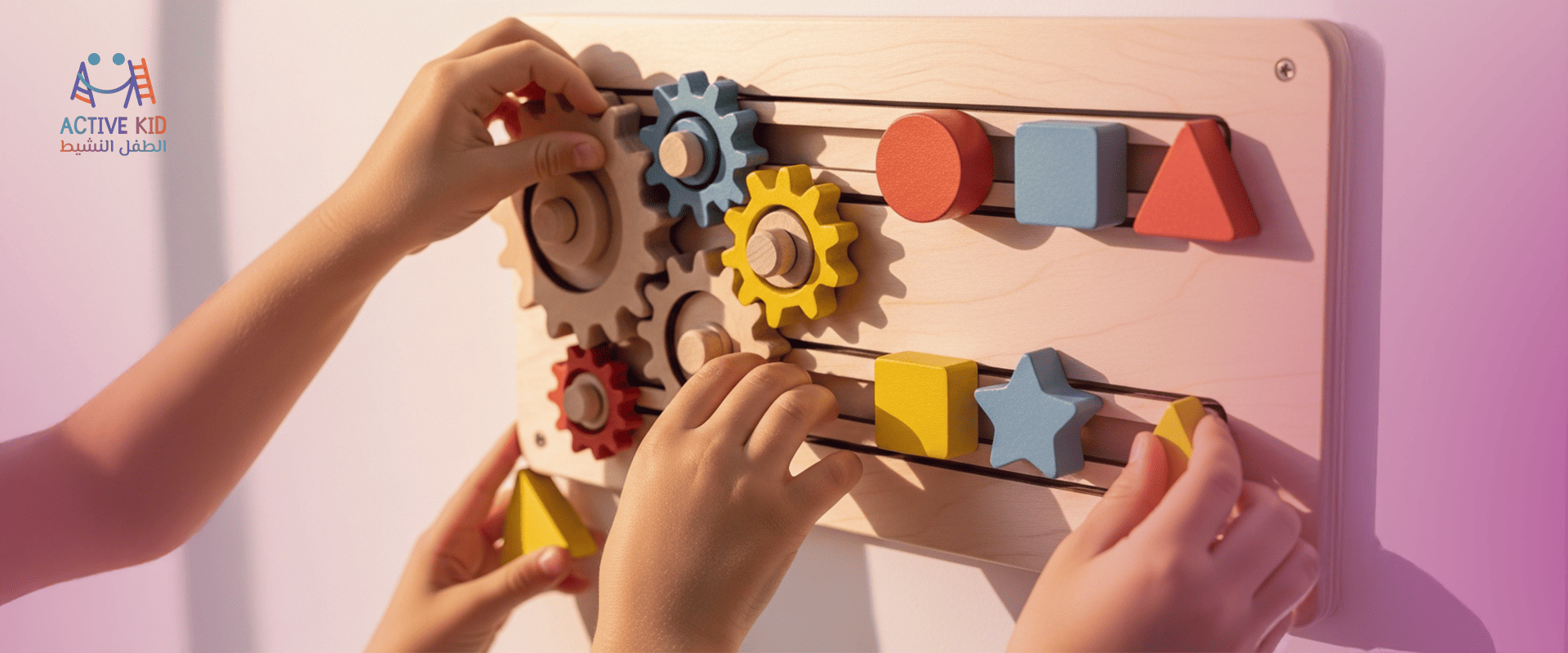
Wall toys rely heavily on fine motor skills, making them one of the best ways to improve a child's hand-eye coordination. When a child uses their fingers to move the pieces or climbs on action wall toys, they are engaging in one of the most important activities for developing their motor skills .
These games help strengthen the fine muscles in the fingers and hands, skills that are essential later on for writing, grasping objects, and using other educational toys. Hand-eye coordination also gradually improves each time the child attempts to replicate the movement with greater accuracy.
For a hyperactive child, wall toys offer a safe and structured outlet for physical activity, especially those designed for climbing, pushing, and pulling. This activity helps build self-confidence, as it allows them to feel in control of their body and cope with physical challenges.
Because the active child's toys are designed with high safety standards and are suitable for different ages, they give parents peace of mind while leaving enough space for the child to be active and develop his abilities in a safe, fun and challenging environment.
Developing social skills and communication among children:
Wall games are an ideal way to encourage cooperative play, especially when the game is shared and requires more than one child to complete the activity. This is where their role in developing children's social skills comes in , such as sharing, waiting, cooperation, and respecting others' roles.
When a child interacts with others during play, they learn how to negotiate and communicate, and begin to understand basic social concepts. Play also helps build a child's social skills and boosts their self-confidence when they successfully solve a problem or complete a task in front of friends or family members.
The wall games from Active Child are designed to suit more than one child at the same time, whether at home, kindergarten or learning center, making them a great way to build positive relationships between children in a natural and pressure-free way.
Games with shared tasks also contribute to enhancing language skills, as children exchange dialogue during play, which directly impacts the development of their abilities in expression and communication, which are essential aspects in the journey of developing children's skills .
Conclusion:
In conclusion, wall games are not merely tools for fun or entertainment, but rather a comprehensive educational tool that combines learning and enjoyment. They help develop children's cognitive, motor, and social skills , providing them with a rich and stimulating environment for growth and discovery.
With the wide variety and high quality offered by the Active Child Store , parents can choose the perfect toys that suit their child's age and needs, supporting them on their journey of learning and growth. If you're looking for a real investment in your child's abilities, wall toys are the perfect place to start.